
Finding the best POS system for toy stores can make a significant difference in how efficiently a toy shop operates. Toy retailers often manage hundreds or even thousands of products, deal with seasonal demand spikes during holidays, and must provide fast checkout experiences for families and children.
Running a toy store may look fun and colorful from the outside, but behind the scenes it involves complex retail operations. From managing large inventories with multiple variants to handling gift purchases, returns, and impulse buying, toy store owners need reliable tools to keep their businesses running smoothly.
This is why choosing the best POS hardware and software system for toy stores is critical. A modern POS system helps streamline inventory management, speed up checkout, run promotions, support gift cards, and integrate online and in-store sales channels.
In this guide, we will explore the unique needs of toy stores, the most important features to look for in a POS system, considerations for Philippine retailers, and how to choose the best POS system for toy shops in the Philippines.
Unique Needs of Toy Stores
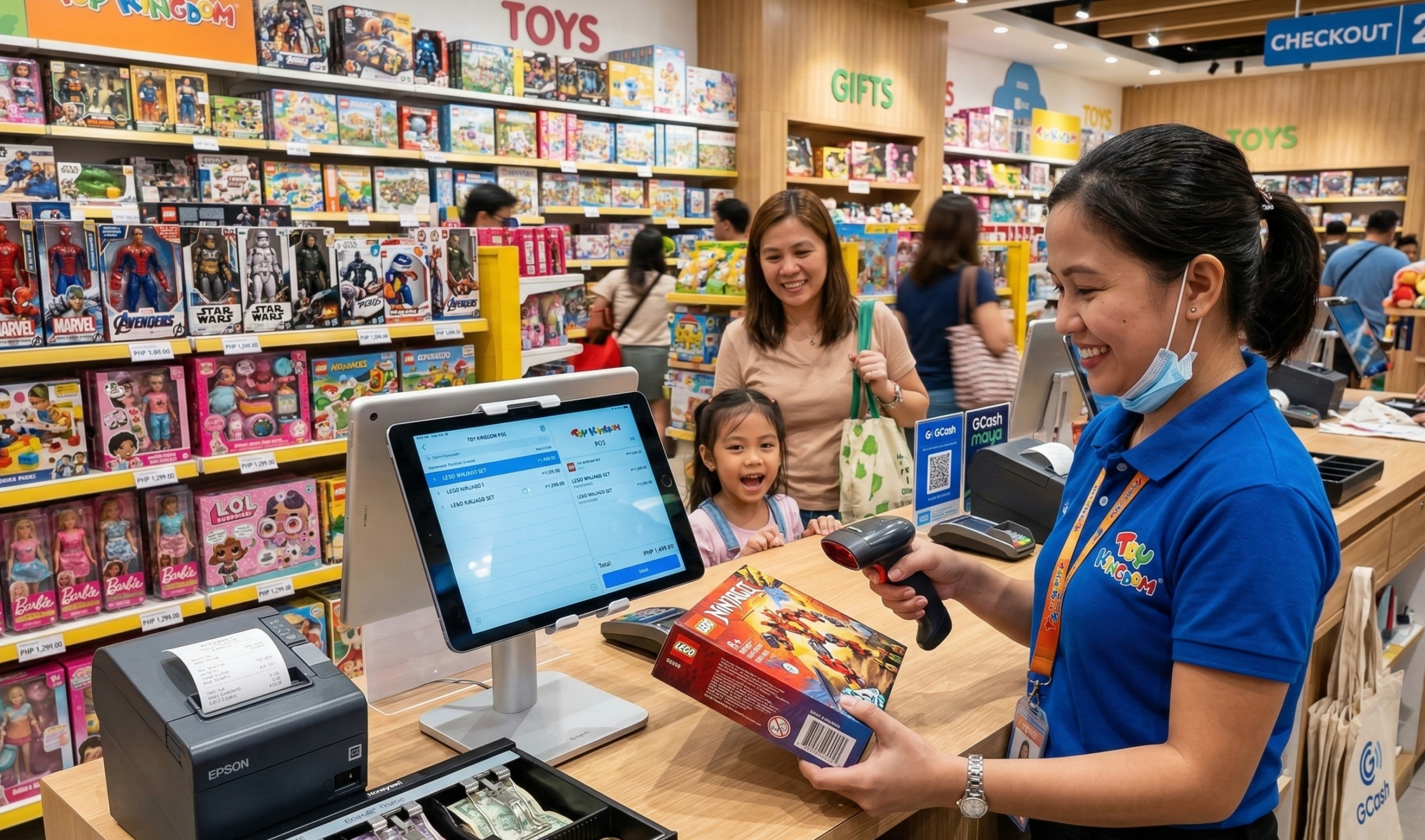
Toy retailers have operational requirements that differ significantly from many other retail businesses.
1. Large and Diverse Inventory
Toy stores often carry a wide range of products including dolls, puzzles, educational toys, action figures, board games, plush toys, and collectibles. Each product may also have multiple variations such as color, size, or edition.
A toy store POS system must support large product catalogs with detailed variants and barcode tracking to ensure accurate inventory management.
2. Seasonal Demand Spikes
Toy sales are highly seasonal. Christmas, birthdays, school holidays, and special events can dramatically increase customer traffic and sales volume.
The best POS system for toy stores in the Philippines should help retailers manage inventory forecasting and handle high transaction volumes during peak seasons.
3. Bundles, Gift Sets, and Kits
Toy stores frequently sell bundles such as themed gift sets, activity kits, or toy collections.
A POS system with product bundling features allows store owners to sell grouped items while maintaining accurate inventory levels for each product.
4. Returns and Exchanges
Returns and exchanges are common in toy retail, especially after holidays when children receive duplicate gifts.
A reliable toy shop POS system should make it easy to process returns while keeping inventory and transaction records accurate.
5. Impulse Buying and Fast Checkout
Toy stores encourage impulse purchases, especially near checkout counters where small toys and accessories are displayed.
A barcode POS system for toy stores helps reduce checkout time and keeps lines moving quickly, improving the overall customer experience.
6. Customer Loyalty and Gift Cards
Gift cards are extremely popular in toy stores, particularly for birthdays and holidays when buyers may not know exactly what the child wants.
POS systems that support gift cards, store credit, and loyalty programs can significantly improve customer retention and repeat purchases.
7. Omnichannel Sales
Many toy retailers now sell both online and in-store. Customers may browse online before purchasing in-store or order online for delivery.
The best POS system for toy stores in the Philippines should integrate with e-commerce platforms to keep inventory and orders synchronized across channels.
Key Features to Look For
When selecting a POS system for a toy shop, certain features are especially valuable.
1. Inventory Management with Variants and Forecasting
- A good toy store inventory management system should track product variants, manage stock levels, and provide demand forecasting to prevent stockouts during peak seasons.
2. Bundling and Product Sets
- Bundling features allow retailers to easily create gift sets, toy bundles, and promotional packages without manually adjusting inventory.
3. Gift Cards, Store Credit, and Loyalty Programs
- A retail POS system in the Philippines should include built-in tools for managing gift cards and loyalty programs to encourage repeat customers.
4. Promotions and Discount Tools
- Toy stores often run sales during holidays or promotional events. A POS system should allow retailers to create discounts, limited-time promotions, and bundle offers easily.
5. E-Commerce Integration
- With the growth of online retail, it is important for toy stores to have POS systems that integrate with e-commerce platforms, ensuring inventory remains accurate across both online and physical stores.
6. Quick and Intuitive Checkout
- Fast checkout is critical in toy retail. The best POS system for toy shops should include barcode scanning, quick product search, and a user-friendly interface.
7. Reporting and Analytics
- Sales analytics and reports help store owners identify best-selling toys, track seasonal trends, and optimize purchasing decisions.
8. Employee Roles and Permissions
- Toy stores often hire seasonal workers during holidays. A POS system should allow managers to assign roles and permissions to maintain security and accountability.
9. Offline Mode and Reliability
- Internet outages can happen, especially in certain areas. A reliable POS system for retail toy stores in the Philippines should support offline mode and sync data once connectivity returns.
10. Hardware Compatibility and Scalability
- Your POS system should support common retail hardware like barcode scanners, receipt printers, and cash drawers while remaining scalable as your store grows.
Considerations for Local or Regional Stores
Retailers in the Philippines should also consider several local operational factors when choosing a POS system.
Support for Local Payment Methods
– Customers expect multiple payment options including credit cards, debit cards, mobile wallets, and QR payments.
Tax Compliance and Official Receipts
– The POS system must comply with Philippine tax regulations and generate official receipts when required.
Hardware Availability and Service
– Choosing a POS provider with accessible technical support and hardware servicing helps minimize downtime.
Internet Reliability
– Offline functionality is particularly important for stores located in areas with inconsistent internet connectivity.
Training Seasonal or Part-Time Staff
– During peak seasons, toy stores often hire temporary employees. An intuitive POS system for toy shops in the Philippines can reduce training time and prevent operational errors.
Cost vs Value
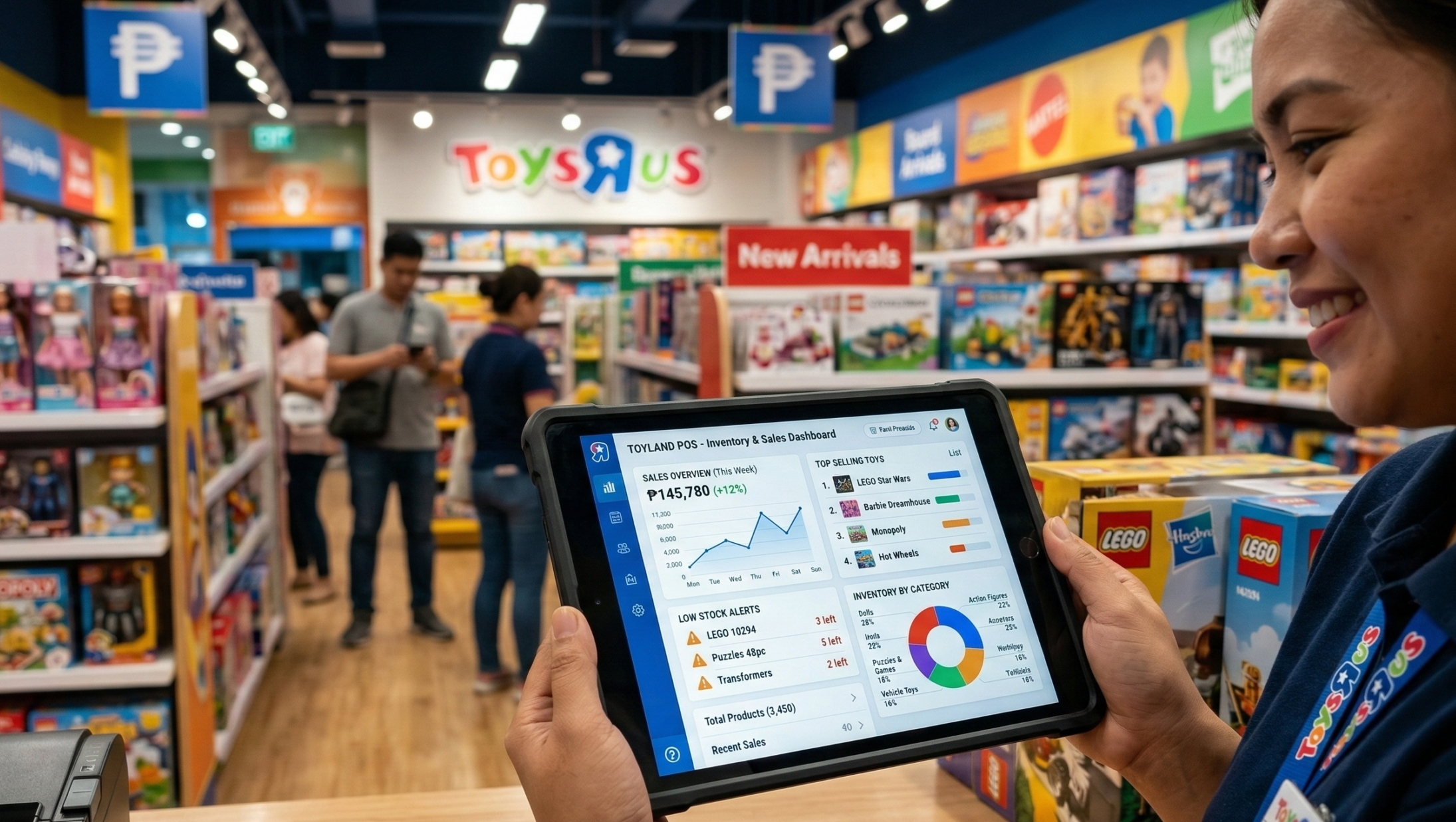
When investing in the best POS system for toy stores in the Philippines, it is important to consider both costs and long-term value.
Upfront Hardware Costs
– Initial investments may include tablets or terminals, barcode scanners, receipt printers, and cash drawers.
Software Subscription Tiers
– Most modern POS systems operate on subscription-based pricing models, with plans based on store size and feature requirements.
Payment Processing Fees
– Transaction fees from payment processors should also be factored into your overall costs.
Hidden Costs
– Some POS systems may charge additional fees for integrations, updates, or technical support.
Return on Investment
– Despite the costs, the right POS system can deliver significant benefits including:
- Faster checkout
- Better inventory control
- Reduced stockouts and overstocking
- Improved customer loyalty
- Increased online and in-store sales
How to Choose the Best POS for Your Toy Store
Selecting the best POS system for toy stores in the Philippines requires careful planning.
Define Your Store’s Scale and Sales Channels
– Determine whether you operate a single store, multiple locations, or both physical and online channels.
List Must-Have vs Nice-to-Have Features
– Identify essential features such as inventory tracking, promotions, or e-commerce integration.
Evaluate Ease of Use
– A POS system should be easy to learn so employees can operate it efficiently.
Check Integrations and Support
– Ensure the POS integrates with your accounting software, e-commerce platform, and payment providers.
Ensure Compliance and Payment Compatibility
– Confirm that the system supports Philippine tax requirements and popular payment methods.
Plan for Growth
– Choose a POS system that can scale as your toy store expands to new locations or adds more products.
Calculate Total Cost of Ownership
– Consider hardware, software subscriptions, payment fees, and long-term support costs before making your final decision.
Conclusion
Toy stores face unique retail challenges from managing large inventories to handling seasonal demand and delivering fast checkout experiences for excited customers. Choosing the best POS system for toy stores in the Philippines can significantly improve efficiency, inventory accuracy, and customer satisfaction.
By focusing on features such as advanced inventory management, barcode scanning, promotions, loyalty programs, and omnichannel integration, toy retailers can streamline operations and increase profitability.
If you’re looking for a reliable POS system for toy shops in the Philippines, Condor POS Solutions offers powerful tools designed to support retail businesses of all sizes.
Book a free demo with Condor POS Solutions today and discover how the right POS system can help your toy store run faster, smarter, and more profitably.