
Managing a single store is challenging enough—but operating multiple branches introduces an entirely new level of complexity. Whether you own a retail chain, restaurant franchise, or service-based business, keeping every location synchronized can quickly become overwhelming when each branch operates on separate systems.
Without a centralized POS system for multi-branch business, companies often struggle with disconnected inventory, inconsistent pricing, delayed reporting, and time-consuming manual processes. These inefficiencies don’t just affect daily operations—they also limit business growth and profitability.
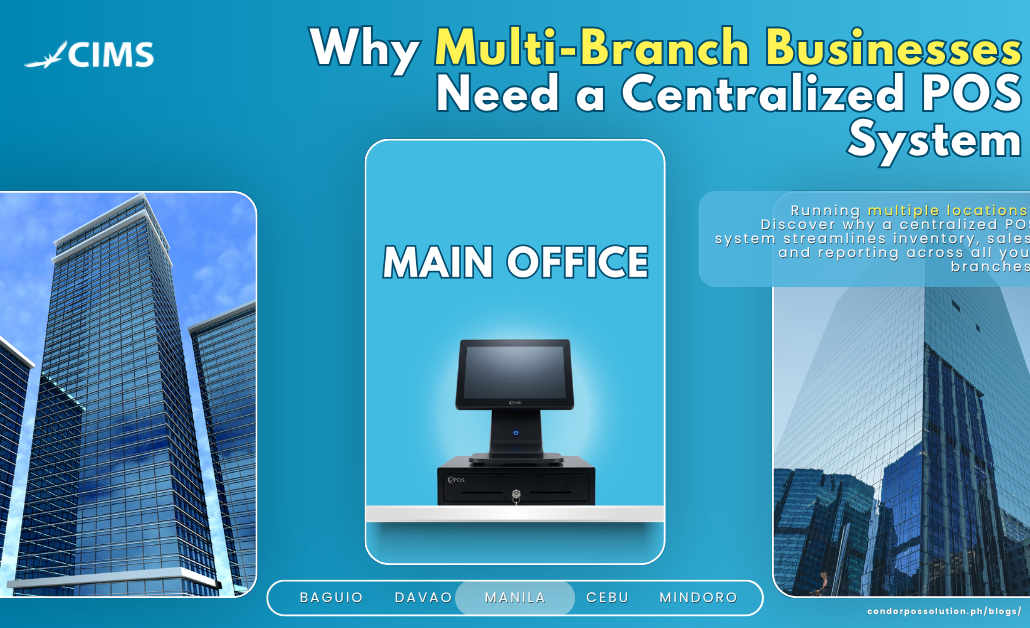
A centralized POS system solves these challenges by connecting every branch into one unified platform, allowing business owners to monitor sales, inventory, customers, and staff in real time.
In this article, you’ll learn what a centralized POS system is, why it’s essential for growing businesses, and how it helps streamline operations across multiple locations.
What Is a Centralized POS System?
A centralized POS system is a point-of-sale solution that manages multiple business locations from a single cloud-based platform. Instead of each branch operating independently with its own database, every location shares synchronized information in real time.
Unlike traditional standalone POS systems that store data locally, a cloud POS for chains allows owners and managers to access business information anytime and anywhere through an internet connection.
With a centralized platform, businesses can:
- Monitor sales from every branch
- Synchronize inventory automatically
- Update prices across all stores instantly
- Manage customer information from one database
- Generate consolidated reports for the entire company
This creates a single source of truth for your entire business.
Key Challenges Multi-Branch Businesses Face Without Centralization
Businesses that rely on separate POS systems often encounter operational issues that become more difficult as they expand.
1. Disconnected Inventory
Each branch tracks inventory independently, making it difficult to know where products are available.
This often leads to:
- Overstocking at one location
- Stock shortages at another
- Missed sales opportunities
- Manual stock transfers
2. Inconsistent Pricing and Promotions
Updating prices or promotional campaigns across multiple locations manually increases the risk of errors.
Customers may receive different pricing depending on which branch they visit, creating inconsistent customer experiences.
3. Delayed Sales Reporting
Without centralized reporting, owners must collect reports from every branch individually before seeing overall business performance.
This delays decision-making and reduces visibility into daily operations.
4. Difficult Employee Monitoring
Managing staff across multiple locations becomes complicated when employee records, attendance, and sales performance are stored separately.
Managers spend more time compiling reports instead of improving operations.
5. Higher IT Maintenance Costs
Separate POS systems often require:
- Individual software updates
- Multiple backups
- Separate maintenance
- Independent troubleshooting
This increases both IT workload and operational costs.
Core Benefits of a Centralized POS System
1. Real-Time Inventory Visibility Across All Branches
A centralized inventory database allows businesses to monitor stock levels from every location in real time.
Benefits include:
- Faster stock transfers
- Reduced stockouts
- Lower inventory costs
- Improved purchasing decisions
- Better demand forecasting
This is especially valuable for businesses with seasonal inventory or high product turnover.
2. Unified Sales and Financial Reporting
Instead of reviewing separate reports from every location, business owners gain access to a centralized dashboard that displays:
- Total sales
- Branch performance
- Product trends
- Gross revenue
- Profitability
- Daily transactions
Having all business data in one place allows faster, data-driven decisions.
3. Company-Wide Pricing and Promotions
With centralized management, pricing updates can be deployed to every branch simultaneously.
This ensures:
- Consistent product pricing
- Uniform promotions
- Better brand consistency
- Reduced pricing errors
4. Centralized Customer Data
Customer information is shared across every branch.
This enables:
- Cross-branch loyalty programs
- Shared customer purchase history
- Personalized promotions
- Better customer service
Customers enjoy a seamless experience regardless of which branch they visit.
5. Simplified Staff Management
A centralized POS system helps businesses manage employees more effectively through:
- Role-based permissions
- Employee performance reports
- Branch-level productivity tracking
- User activity logs
Managers gain better visibility into workforce performance across every location.
6. Easier Expansion
Opening a new branch becomes significantly easier because the new location can connect directly to the existing system.
Business owners can quickly:
- Add registers
- Assign employees
- Sync inventory
- Apply pricing
- Configure taxes
- Standardize operations
This makes growth faster and more cost-effective.
7. Lower IT Costs
Because cloud systems receive automatic updates, businesses avoid maintaining separate servers or installing updates individually at each location.
Benefits include:
- Reduced maintenance costs
- Automatic software updates
- Centralized data backup
- Improved security
- Less downtime
8. Better Fraud Prevention
Centralized systems maintain audit trails for every transaction, making it easier to identify unusual activity.
Managers can monitor:
- Refunds
- Discounts
- Voided transactions
- Cash drawer activity
- User actions
This improves accountability and helps reduce losses.
Real-World Use Cases
Retail Chain
A clothing retailer with five branches notices one store is running low on popular items while another has excess inventory.
Using centralized inventory management, managers can immediately transfer stock between locations instead of placing unnecessary purchase orders.
The result:
- Lower inventory costs
- Faster replenishment
- Improved customer satisfaction
Restaurant Franchise
A restaurant franchise launches a nationwide promotional meal.
Instead of manually updating menus and pricing at every branch, the head office synchronizes changes instantly across all locations using a franchise POS system.
Every branch serves the same menu with identical pricing.
Service Business
A salon with multiple branches allows customers to visit any location while maintaining access to appointment history and customer profiles.
Staff can deliver consistent service because customer records are shared across every branch.
What to Look for in a Centralized POS System
Before investing in a multi-store point of sale, ensure the solution includes the following capabilities:
Cloud-Based Accessibility
Access business information anytime from any device.
Multi-Location Inventory Synchronization
Real-time inventory updates across every branch.
Role-Based User Permissions
Control employee access based on responsibilities.
Consolidated Reporting
Unified dashboards for sales, inventory, finance, and business analytics.
Third-Party Integrations
Look for integrations with:
- Accounting software
- eCommerce platforms
- CRM systems
- Loyalty programs
- Payment gateways
Reliable Offline Mode
Operations should continue even if internet connectivity is temporarily unavailable.
Scalability
Choose a platform that can easily support additional stores as your business grows.
How Condor POS Solves This
As businesses expand, managing operations manually becomes increasingly difficult. Condor POS provides a cloud-based solution designed to help multi-branch businesses stay connected through one centralized platform.
With Condor POS, businesses can:
- Manage multiple branches from a centralized dashboard
- Monitor inventory across locations in real time
- Generate consolidated sales and business reports
- Standardize pricing and promotions company-wide
- Track employee performance by branch
- Access business data remotely through the cloud
- Scale operations as new branches open
Whether you’re operating a retail chain, restaurant group, or franchise business, Condor POS helps simplify daily operations while providing better visibility into business performance.
See how Condor POS can unify all your branches and help you operate more efficiently.
A centralized POS system for multi-branch business provides complete visibility across every branch, helping owners streamline inventory management, unify reporting, standardize pricing, improve customer experiences, and support future growth.
If you’re ready to simplify your operations and gain real-time control over every branch, book a demo with Condor POS today and discover how a centralized POS solution can support your business growth.